
WorldTimePortal
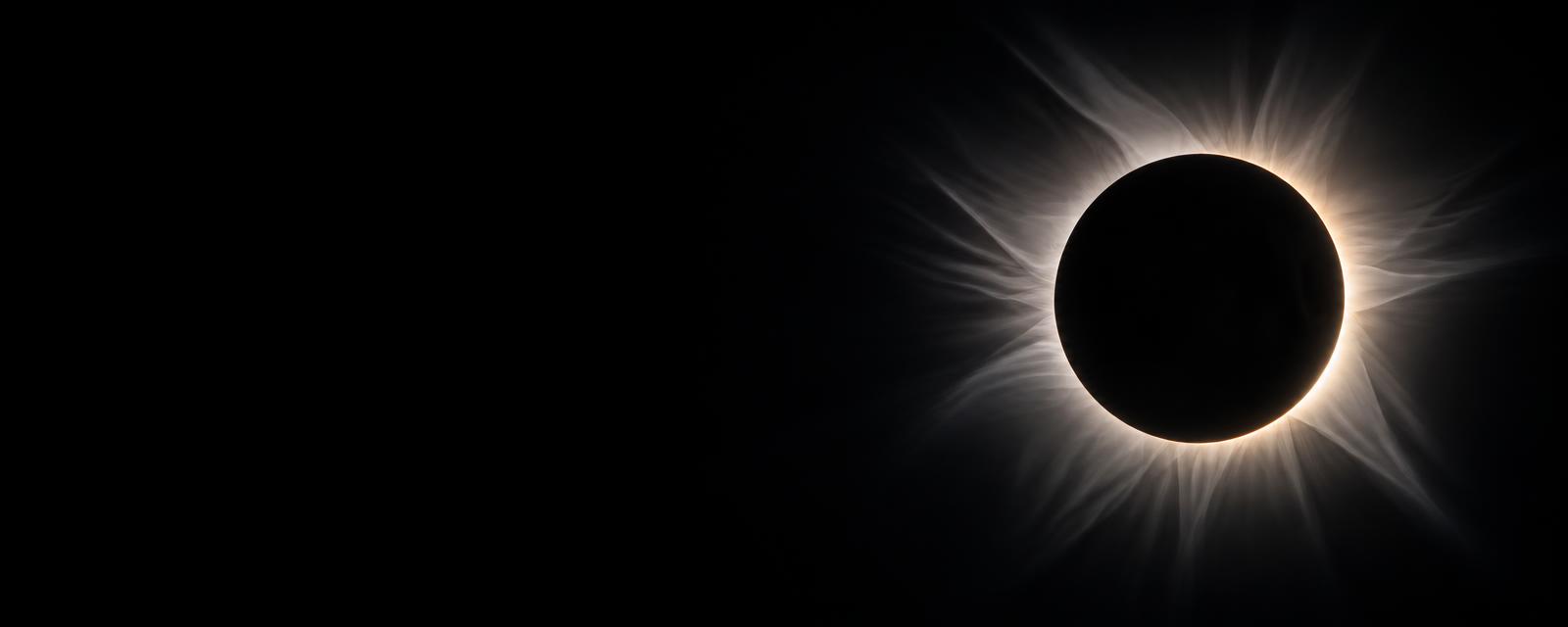
Artistic illustration of a total solar eclipse and its corona

The worldwide eclipse calendar

Solar and Lunar Eclipses Worldwide the Next 5 Years

A ring of fire. A copper-red Moon. A few extraordinary minutes of darkness. Find the next solar and lunar eclipses, with dates and worldwide visibility.

Next eclipse · Annular solar

85days
06hours
16minutes
30seconds

Countdown to predicted greatest eclipse, not your local start time.

Explore the calendar

Artistic illustration · not an event photograph

NASA catalog · independently cross-checked11 solar · 12 lunarDates in UTC · checked 21 October 2026

The next five years, at a glance

13 November 2026 – 21 October 2031

The verified catalog ends on 21 October 2031. A complete five-year view requires a new source review.

23 eclipses

Regions below describe where at least part of an eclipse may be visible. They do not mean an entire country sees totality or annularity. Check the NASA event page for your exact location.

20275 events

Worldwide solar and lunar eclipses in 2027; UTC dates and broad visibility regions
Date (UTC)Eclipse & visibility
2027Greatest: Annular solar

Much of Africa, South America, Pacific, Atlantic, Antarctica.

2027Greatest: Penumbral lunar

Europe, Asia, North/West Australia, Africa, Much of North America, South America, Pacific, Atlantic, Indian Ocean, Arctic, Antarctica.

2027Penumbral lunar

Eastern Africa, Asia, Australia and the Pacific. Extremely marginal penumbral event: included by NASA and EclipseWise, but not a readily observable eclipse.

2027Greatest: Total solar

Europe, South/West Asia, Africa, East in North America, Atlantic, Indian Ocean.

2027Greatest: Penumbral lunar

West in Europe, North in Asia, Much of Australia, North/West Africa, North America, South America, Pacific, Atlantic, Antarctica.

20285 events

Worldwide solar and lunar eclipses in 2028; UTC dates and broad visibility regions
Date (UTC)Eclipse & visibility
2028Greatest: Partial lunar

Europe, North/West Asia, Africa, North America, South America, Pacific, Atlantic, Indian Ocean, Arctic.

2028Greatest: Annular solar

South/West Europe, North/West Africa, South/East North America, South America, Pacific, Atlantic.

2028Greatest: Partial lunar

Europe, Asia, Australia, Africa, South/East South America, Pacific, Atlantic, Indian Ocean, Antarctica.

2028Greatest: Total solar

South in Asia, Australia, Pacific, Indian Ocean, Antarctica.

2028Greatest: Total lunar

Europe, Asia, Australia, Africa, North/West North America, Pacific, Atlantic, Indian Ocean, Arctic.

20296 events

Worldwide solar and lunar eclipses in 2029; UTC dates and broad visibility regions
Date (UTC)Eclipse & visibility
2029Greatest: Partial solar

North America, Pacific, Atlantic.

2029Greatest: Partial solar

Much of Europe, North in Asia, North/West North America, Pacific, Arctic.

2029Greatest: Total lunar

Europe, West in Asia, Africa, North America, South America, Pacific, Atlantic, Indian Ocean, Antarctica.

2029Greatest: Partial solar

South in South America, Pacific, Atlantic.

2029Greatest: Partial solar

South in South America, Pacific, Atlantic, Indian Ocean, Antarctica.

2029Greatest: Total lunar

Europe, Asia, North/West Australia, Africa, North America, South America, Pacific, Atlantic, Indian Ocean, Arctic.

20304 events

Worldwide solar and lunar eclipses in 2030; UTC dates and broad visibility regions
Date (UTC)Eclipse & visibility
2030Greatest: Annular solar

Europe, Asia, Much of Africa, North/West North America, Pacific, Atlantic, Arctic.

2030Greatest: Partial lunar

Europe, Asia, Australia, Africa, South/East South America, Pacific, Atlantic, Indian Ocean, Antarctica.

2030Greatest: Total solar

South in Asia, Australia, South/East Africa, Pacific, Atlantic, Indian Ocean, Antarctica.

2030Greatest: Penumbral lunar

Europe, Asia, North/West Australia, Africa, North America, South America, Pacific, Atlantic, Indian Ocean, Arctic.

20313 events

Worldwide solar and lunar eclipses in 2031; UTC dates and broad visibility regions
Date (UTC)Eclipse & visibility
2031Greatest: Penumbral lunar

Europe, West in Asia, Africa, North America, South America, Pacific, Atlantic, Indian Ocean, Antarctica.

2031Greatest: Annular solar

Much of Asia, North/West Australia, South/East Africa, Pacific, Atlantic, Indian Ocean.

2031Greatest: Penumbral lunar

Much of Asia, Australia, South/West North America, South/West South America, Pacific, Atlantic, Indian Ocean, Antarctica.

A guide to the next solar and lunar eclipses

Wondering when the next eclipse happens? A worldwide eclipse calendar answers the first question — when — but the second question is just as important: where can you see it? Solar and lunar eclipses have very different viewing conditions. This overview covers the next five years from today's UTC date, with a NASA source link for each event.

Solar eclipses: total, annular and partial

During a total solar eclipse, the Moon completely covers the bright face of the Sun along a narrow path. The solar corona becomes visible during totality. An annular solar eclipse leaves a bright ring — often called a ring of fire — because the Moon's apparent size is smaller than the Sun's. A partial solar eclipse covers only part of the solar disc. Even when an event is classified as total or annular, most places within its wider visibility region see only a partial eclipse.

Lunar eclipses and the blood Moon

In a total lunar eclipse, the Moon passes fully through Earth's darker shadow. Sunlight filtered through Earth's atmosphere can make the Moon look coppery or red, inspiring the name blood Moon. Its colour depends on atmospheric conditions. A partial lunar eclipse darkens only part of the Moon; a penumbral eclipse produces a much subtler change in brightness. Lunar eclipses are safe to watch without solar glasses.

Notable eclipses in 2027, 2028 and 2030

The annular solar eclipse on 6 February 2027 is followed by the total solar eclipse on 2 August 2027, whose central path crosses parts of Spain, North Africa and the Middle East. Another total solar eclipse occurs on 22 July 2028, with totality in parts of Australia and New Zealand. On 25 November 2030, the total solar eclipse path crosses parts of southern Africa and Australia. These are path descriptions, not countrywide viewing guarantees: consult the event maps before making travel plans.

UTC dates are not always your local dates

An eclipse near midnight UTC may fall on the previous or following local calendar date. Greatest eclipse is a global reference moment, not the start time for your city. The linked observing pages provide local circumstances; check whether the Sun or Moon is above your horizon and which phases are visible. A clear sky and an unobstructed horizon matter just as much as the astronomical schedule.

Sources & accuracy

Reviewed on 21 October 2026. Dates and types were checked against NASA's solar and lunar catalogs and independently cross-checked against published eclipse tables. Broad visibility regions and predicted UTC maximum times follow those independent tables. NASA's Terrestrial Dynamical Time (TD) catalog values are not displayed as UTC.

The extremely marginal penumbral event on 18 July 2027 is included by NASA and EclipseWise. It is flagged explicitly, rather than silently omitted, and is not a readily observable eclipse. No UTC countdown is given for this event.

The list advances with the date; source predictions are not fetched or reverified automatically. Verified coverage ends on 21 October 2031. Future refinements to Earth's rotation can slightly change predicted times, and local weather determines what you actually see. Use NASA's event pages for final observing plans.

Eclipse questions, answered

What is the difference between a solar and a lunar eclipse?

A solar eclipse occurs at new moon when the Moon passes between Earth and the Sun. A lunar eclipse occurs at full moon when the Moon moves through Earth's shadow. The Moon's orbit is tilted, so eclipses do not happen every month.

Can I see every eclipse from my location?

No. Solar eclipses are visible only within a particular region of Earth; totality or annularity follows a narrow path. A lunar eclipse can be seen from the night side of Earth where the Moon is above the horizon, though some locations see only part of the event. Check a location-specific source for local circumstances.

What does greatest eclipse mean?

It is a single global reference instant, not the start of the eclipse where you live. For solar eclipses, it is when the axis of the Moon's shadow passes closest to Earth's centre. For lunar eclipses, it is when the Moon passes closest to the axis of Earth's shadow. Local start, end and maximum times differ.

Does daylight saving time change an eclipse?

No. An eclipse happens at the same physical instant regardless of clock changes. The dates in this overview use UTC. Local dates and clock times can differ, especially near midnight. Use a location-specific source to check the time zone and daylight saving rules on the event date.

What is an annular solar eclipse?

An annular eclipse occurs when the Moon appears too small to cover the Sun completely. Along the central path, a ring of sunlight remains around the Moon. That ring is still dangerous to look at without proper solar protection.

What is a penumbral lunar eclipse?

The Moon passes through Earth's faint outer shadow, the penumbra, without entering the darker umbra. The dimming can be subtle. A partial lunar eclipse enters the umbra only partly; a total lunar eclipse carries the entire Moon inside it.

Is it safe to look at an eclipse?

A lunar eclipse is safe to view with the naked eye. For a solar eclipse, use undamaged solar viewers that meet ISO 12312-2, from a reputable supplier. Ordinary sunglasses are not safe. Never look through an unfiltered camera, telescope or binoculars. Only during the brief fully total phase, and only inside the path of totality, may the Sun be viewed directly; replace protection before the bright Sun reappears.

How reliable are the dates and times?

Dates and types come from NASA's eclipse catalogs and are cross-checked against independent published eclipse tables. Greatest-eclipse UTC times are shown to the minute. They are astronomical predictions, not a guarantee of what you will see: local visibility, weather and future refinements to Earth's rotation affect observing circumstances.